Why salt water changes the schedule
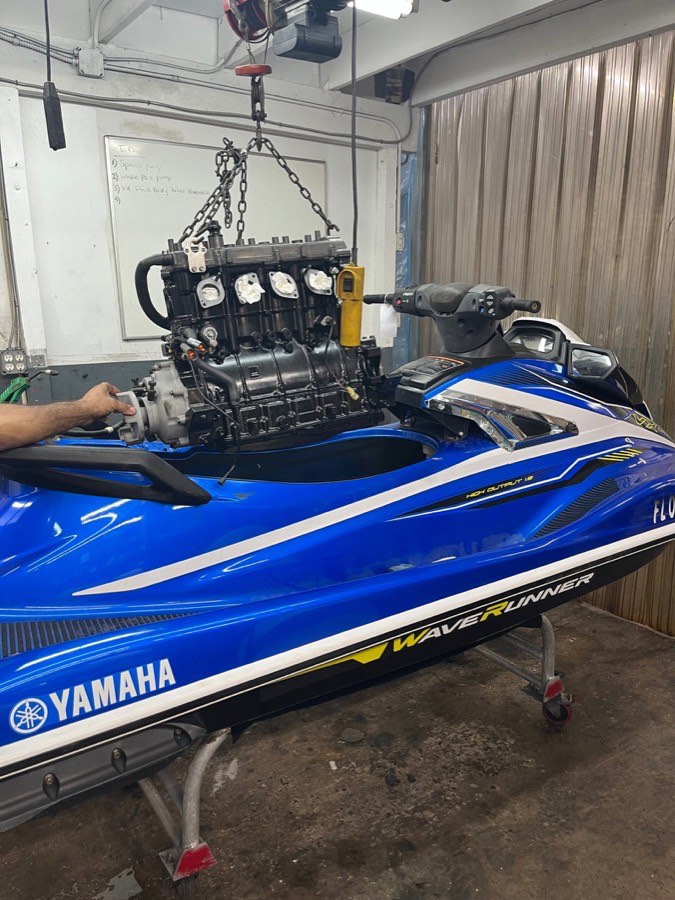
Manufacturers write their service intervals for average use. South Florida isn't average: riding is year-round, almost always in salt or brackish water, and skis sit on lifts in heat and humidity between rides. Salt corrodes terminals, clamps and cooling passages; heat cooks batteries and old fuel. That's why we check skis monthly and do a full service every 3 months — not once a year. Always follow your owner's manual as the minimum, then tighten it up for salt.
After every ride (you, 5 minutes)
- Flush the cooling system and exhaust with fresh water — see how to flush your jet ski after salt water.
- Rinse the hull, pump area and intake grate.
- Check the intake for weeds, rope or shells.
- Leave the seat open so the engine bay dries before you cover it.
- Put it on a battery tender if it'll sit more than a few days.
Every month (a quick inspection)
A monthly look-over is where problems get caught early:
- Battery test and terminal clean — corrosion is the #1 cause of dead skis at the dock.
- Oil and coolant levels (where your model has coolant), visible leaks, loose or rusted hose clamps.
- A diagnostic scan for stored fault codes — many issues log a code long before a warning light.
- Run the ski, flush it, and treat the engine bay against corrosion.
- Fuel: if it's been sitting, old fuel is next month's no-start.
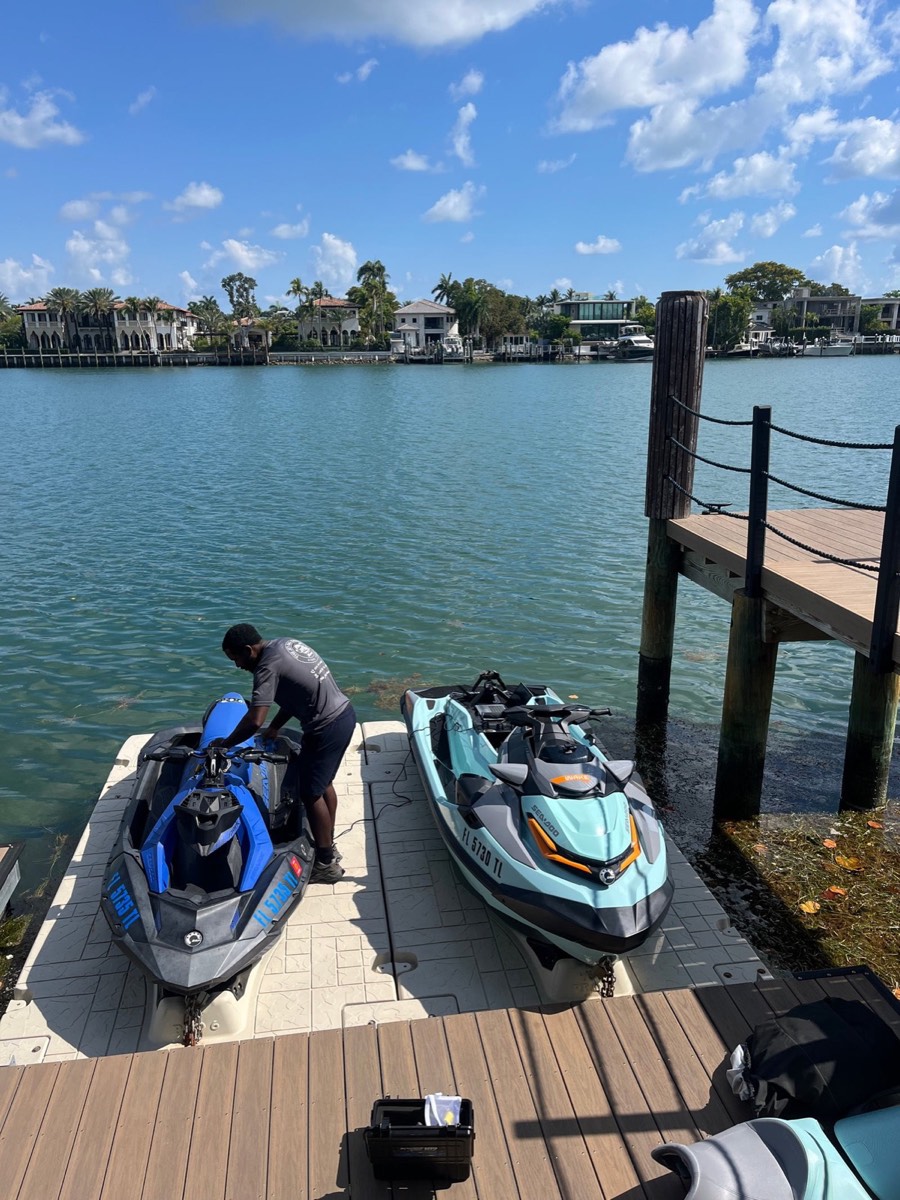
This is exactly what our Monthly Checkup plan covers — a technician at your dock every month for $75.
Every 3 months (a full service)
The full service is where wear parts get replaced before they fail:
- Oil change and new oil filter
- New spark plugs
- Full systems inspection — pump, impeller, wear ring, steering, cables
- Hose clamps treated, anti-corrosion, flush and run
- Service counter reset
Our Quarterly Service plan does this every 3 months at your dock for $350. Want both the monthly checks and the quarterly service in one? That's the Complete Confidence plan.
Once a year (or before a long layup)
- Deeper look at the jet pump, impeller and wear ring for wear and cavitation damage.
- Check the ride plate and intake grate bolts, bumpers and hull for damage.
- Replace a tired battery before summer, not after it strands you.
- If the ski will sit for weeks, follow our off-season storage guide.
What you can do yourself — and what you shouldn't
Flushing, rinsing, battery tenders and keeping an eye on things are all owner jobs. Oil changes, plugs and diagnostics are doable for handy owners — but a missed step (wrong oil, an over-tightened plug, a skipped reset) causes expensive damage, and you lose the documented service history buyers look for. If you'd rather never think about it, compare all the plans — every visit ends with a report and photos on your phone.
Mobile jet ski service at your dock across Miami-Dade, Broward & Palm Beach — from South Florida's watercraft specialist since 1992.
Quick answers
How often should a jet ski be serviced?
Follow your owner's manual as the minimum. In South Florida's year-round saltwater riding, we recommend a monthly inspection and a full service (oil, filter, spark plugs, inspection) every 3 months.
What should I do after every jet ski ride?
Flush the cooling system and exhaust with fresh water, rinse the hull and pump, check the intake for debris, let the engine bay dry and keep the battery on a tender if it will sit.
Is a monthly jet ski inspection worth it?
Yes — monthly checks catch weak batteries, corroded terminals, loose clamps and stored fault codes before they turn into a breakdown on the water.